
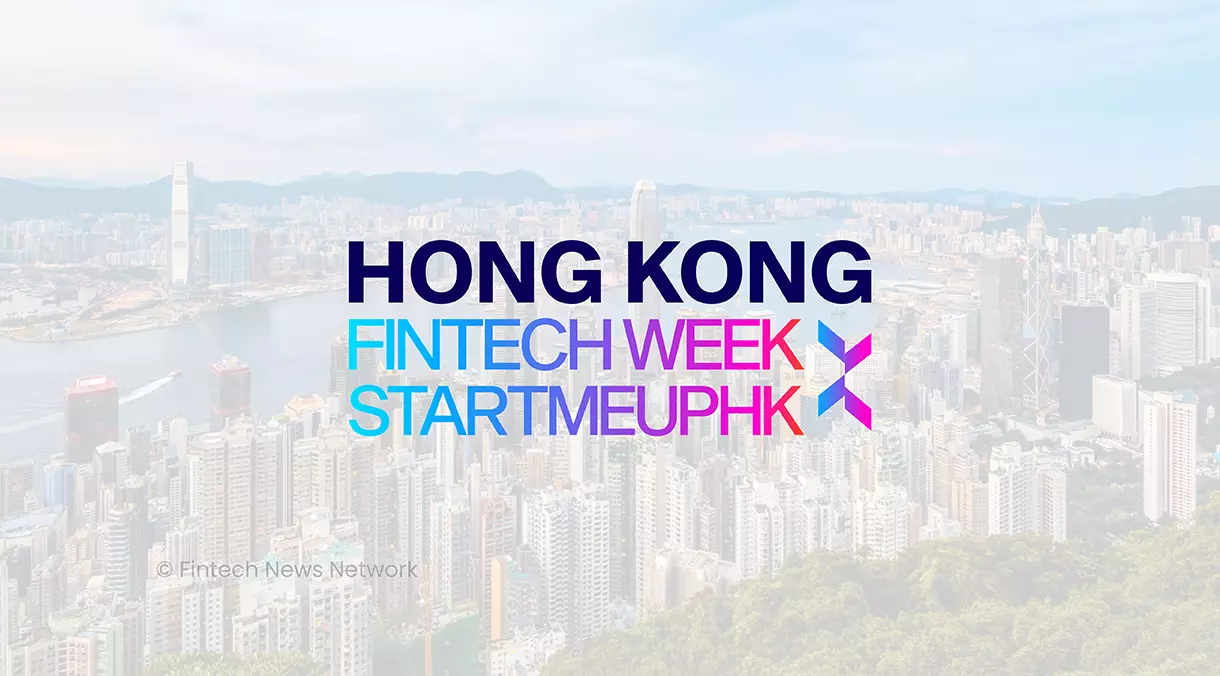
Hong Kong Fintech Week x StartmeupHK 2026 wrapped up on November 06, ending a week of dialogue, business exchanges, startup displays, and ecosystem events that gathered policymakers, regulators, entrepreneurs, investors, and innovators globally.


Organized by the Financial Services and the Treasury Bureau, the Commerce and Economic Development Bureau and Invest Hong Kong (InvestHK), in collaboration with the Hong Kong Monetary Authority (HKMA), the Securities and Futures Commission (SFC), the Insurance Authority, and the appointed event organizer, Finoverse, the week-long program attracted more than 48,000 visitors from over 120 economies, featured over 1,100 speakers and 800 exhibitors, and welcomed more than 30 Chinese Mainland and international delegations.

Throughout the week, speakers explored how financial and technological innovation are reshaping industries, business models and global markets. Discussions ranged from artificial intelligence (AI), digital assets and tokenization to entrepreneurship, sustainability, international investment and cross-border growth.
Government representatives outlined initiatives to promote innovation in financial services and cross-border commerce, while regulators addressed emerging risks. Financial institutions presented developments in AI and digital assets, and startups showcased solutions in agentic commerce, AI governance and cross-border payment interoperability.
AI adoption gains momentum
Hong Kong’s SFC presented findings from its Large Firm AI Readiness Survey, spotlighting the extensive use of AI across businesses.
The survey, which covered 20 large financial firms with 78 affiliated licensed corporations in Hong Kong, found that 90% of the surveyed firms had already connected AI tools to internal systems, including email and enterprise messaging as well as documents or knowledge repositories.
AI integration is also extending to customer data, compliance platforms and trading-related systems, indicating a shift towards embedding AI in business and operational workflows rather than using it solely as a standalone tool.
Meanwhile, agentic AI adoption remains at an earlier stage. Six firms had deployed agentic AI in live production, and another five allowed it in controlled pilots or tests. Together, these 11 firms represented 55% of respondents. The remaining nine were still developing or considering potential agentic AI use cases.
HKMA tokenization initiatives
At Hong Kong Fintech Week x StartmeupHK 2026, HKMA and Cyberport launched the tConnect Launchpad, a new program connecting financial institutions, technology firms and digital asset innovators to speed up tokenization in Hong Kong.
The launchpad sits under the tokenization pillar of the HKMA’s Fintech 2030 strategy introduced last year, which follows the DART framework covering data and payments, AI and resilience.
Alongside the launchpad, HKMA advanced EnsembleTX, its platform for settling tokenized transactions under Project Ensemble. The upgrade enables round-the-clock interbank settlement of tokenized deposit transactions using tokenized central bank money (CeBM).
The central bank said this will let banks and their clients allocate funds globally, manage tokenized asset portfolios, and run treasury operations more efficiently.
The pilot now involves 12 participating banks and 20 industry pioneers.
Launched in November 2025, EnsembleTX initially used Hong Kong’s Real Time Gross Settlement (RTGS) system to settle tokenized deposit transactions between banks.
Advancing agentic finance
Another key initiative launched by HKMA at Hong Kong Fintech Week x StartmeupHK 2026 was Project SAGE. The initiative, which stands for Securing Agentic Finance with Governance and Enablement, aims to support the responsible development and adoption of agentic finance in Hong Kong by facilitating practical applications while ensuring appropriate governance frameworks are in place.
Project SAGE focuses on four key areas:
- Market Development and Use Case Exploration: Support industry participants and their partners in exploring and validating agentic finance use cases and solutions, while facilitating dialogue with HKMA on practical implementation considerations and challenges;
- Agent Identity: Explore approaches to verifying AI agents’ identities and delegated authority, including know-your-agent (KYA) practices and authentication mechanisms;
- Interoperability Standards: Facilitate industry discussion on interoperability-related topics, including relevant standards and protocols; and
- Legal and Regulatory Frameworks: Exchange views on legal and regulatory considerations arising from agentic finance, including governance arrangements, liability, and consumer protection.
To bring together relevant expertise and perspectives to Project SAGE, HKMA established the Agentic Finance Expert Group. The group comprises stakeholders including financial institutions, tech service providers, professional service firms and academia such as Adyen, Mastercard, Visa, WeChat Pay, Ant International, Amazon, Google Cloud, Animoca Brands, Tencent Cloud, and PwC.
A post-quantum cryptography toolkit
HKMA and the Hong Kong University of Science and Technology (HKUST) jointly launched the Post-Quantum Cryptography (PQC) Toolkit. The toolkit lays out a structured, comprehensive framework for banks to prepare for the transition to cryptographic systems and withstand potential threats from quantum computers.
The framework covers governance and accountability, assessments of existing cryptographic exposure, identification of transition requirements and monitoring of implementation progress. The toolkit also includes key planning considerations for banks to enable an orderly and risk-based transition.
Expanding cross-border payment connectivity
On cross-border payments, the Hong Kong government announced that it will link its Faster Payment System (FPS) with UnionPay International (UPI) by the end of 2026.
The connection will progressively enable users to pay by scanning QR codes at over 100 million merchants under UnionPay and its partner networks in Hong Kong, the Chinese Mainland and more than 40 overseas markets. It aims to offer greater convenience in retail payments both locally and while traveling.

Strengthening financial services cooperation with the British Virgin Islands
On the international front, the Hong Kong government signed a memorandum of understanding (MoU) with the British Virgin Islands (BVI) to strengthen financial services cooperation.
Under the agreement, eligible BVI tech businesses, micro, small and medium-sized enterprises (MSMEs) and financial institutions seeking to set up or scale up in Hong Kong will receive support, including access to incubation and entrepreneurship programs offering funding, workspace and mentoring.
Both governments will also cooperate more closely on policies and initiatives that advance the BVI’s MSME framework, in addition to collaborating on green and sustainable finance. This includes developing ESG-related bonds and funds, as well as insurance-linked securities.
In fintech, the agreement is expected to increase the exchange of knowledge and expertise, particularly in digital assets and tokens. It also seeks to encourage the use of BVI corporate vehicles and investment structures.
Cyberport opens new round of blockchain pilot subsidy scheme
During Hong Kong Fintech Week x StartmeupHK 2026, Cyberport opened the second round of its blockchain and digital asset pilot subsidy scheme.
Commissioned by the Financial Services and the Treasury Bureau (FSTB), the scheme supports tech companies working with business partners, known as Project Sponsors, to develop and test blockchain solutions, including real-world asset (RWA) tokenization, offering funding of up to 80% of their actual cost, capped at HK$500,000 (US$63,800) per approved project.
To qualify, projects must have a signed sponsor agreement and address a business problem for which no previous use case exists in Hong Kong. The proposed solution must not have been used by the sponsor in live operations.
Funding is released in two stages: 50% upon signing the funding agreement and submitting supporting documents, with the remainder paid after project completion and approval of the final reports.
Applications close on December 31, 2026, and approved projects must be completed by June 30, 2027.
Launched in June 2025, the first round drew more than 200 bids and admitted nine projects. Most of these have since been put into commercial use, according to Cyberport.
SFC to develop agentic AI guidelines and cybersecurity framework
At the event, the SFC announced plans to develop principles-based guidance for AI applications with greater autonomy, focusing on safety, human accountability and oversight. The regulator said it will draw on its Large Firm AI Readiness Survey and trials under GenAI Sandbox++ when developing further guidance.
SFC CEO Julia Leung warned that agentic AI could compound errors, take unauthorized actions and disrupt other firms, requiring appropriate safeguards and guidelines.
The SFC is also planning a cybersecurity framework setting baseline requirements for all licensed firms, with enhanced measures for higher-risk firms.

Hong Kong bourse extends derivatives after-hours trading
Hong Kong Exchanges and Clearing (HKEX), the parent company and operator of the Hong Kong financial markets, is looking to extend its derivatives after-hours trading (AHT) session to 4:15 am from March 2027, adding 75 minutes to the current closing time of 3:00 am.
HKEX said the longer session will give market participants more flexibility to manage risk and respond to global developments outside regular Hong Kong trading hours. It added that the extension will support the city’s role as an international risk management centre, as well as improve market accessibility and operational flexibility.
To accommodate the longer session, HKEX will adjust certain post-trade service windows and risk management procedures. Day session trading hours, holiday trading and other existing derivatives market arrangements will remain unchanged.
The extension remains subject to regulatory approval and market readiness. HKEX said it may consider a further extension to 5:15 am in November 2027, depending on market developments following the initial rollout.
Banks advance tokenized banking and digital assets services
During Hong Kong Fintech Week x StartmeupHK 2026, banks introduced several new services and innovations.
In particular, Standard Chartered launched round-the-clock tokenized deposit transfers for corporate clients in Hong Kong, making the city the first market in its global network to offer the service.
Eligible businesses will be able to use tokenized commercial bank deposits for treasury and investment transactions, including intragroup liquidity management.
The service runs on Standard Chartered’s blockchain infrastructure, and uses HKMA’s EnsembleTX platform to enable real-time transfers between participating banks.
Separately, Standard Chartered is also working with Fireblocks to embed banking capabilities into its platform, giving digital asset clients direct access to these services. HashKey has also joined the ecosystem.
At HSBC, Group CEO Georges Elhedery announced plans to establish a global AI and Emerging Technology Institute in Hong Kong in 2027 focusing on AI, blockchain and quantum cryptography. He also shared that RedCoin, HSBC’s HKD-denominated stablecoin, had reached 50,000 users approximately one week after its launch in Hong Kong.
Issued under an HKMA license, RedCoin is available to all PayMe clients. HSBC plans to extend it to all HSBC and Hang Seng clients soon, though no date has been given.
Corporate partnerships target agentic commerce and cross-border payments
At Hong Kong Fintech Week x StartmeupHK 2026, major payment platforms unveiled key developments to advance cross-border payments and agentic commerce.
Visa and the Hong Kong Science and Technology Parks Corporation (HKSTP) signed a MoU to explore commerce and payment innovations in Hong Kong, including agentic commerce.
The partnership establishes a strategic framework to bring Visa’s global commerce and payment technologies to the city and work together with HKSTP to develop solutions that address the needs in Hong Kong, the Greater Bay Area, and the wider Asia-Pacific (APAC) markets.

TenPay Global, the cross-border payment platform under Tencent, inked a partnership with Mastercard to explore enhanced cross-border payment interoperability and new opportunities in agentic payments.
The collaboration aims to provide international users with more ways to pay using familiar digital wallets and issuer apps at QR-enabled merchants in the Chinese Mainland. It will also provide merchants with opportunities to serve international customers, and will look at ways to enable more overseas senders to transfer funds into the Weixin ecosystem.
Finally, Ant Digital Technologies launched ZOLOZ KYA to verify and govern AI agents. The tool takes ZOLOZ’s existing KYC and know-your-business (KYB) checks and applies them to agents across their full lifecycle.
Featured image: Edited by Fintech News Hong Kong, based on image by user6699736 via Magnific
