



Hong Kong is a city that takes financial security seriously, boasting one of the highest insurance penetration rates in the world. The industry rakes in a staggering HK$638 billion in gross premiums, according to a report by Quinlan & Associates, with life insurance accounting for the lion’s share at nearly 60% of that total.

But how does such a massive volume of capital get deployed on the ground? Walk into a bank or meet with an agent, and the advice is almost standard: buy a whole life insurance policy.
It promises the best of both worlds: lifetime protection and a savings plan that could grow your wealth, a pitch that sounds like the perfect “set and forget” safety net.
This simplicity is precisely what makes the narrative so powerful. It explains why whole life plans have achieved such hegemony, making up 77% of the market’s in-force life insurance premiums by value.
The popularity of these products is undeniable. But popularity alone is not proof of efficiency. Beneath the glossy brochures and comforting promises of guaranteed returns lies another reality.
Evidence suggests that this default choice, while convenient, may actually be an inefficient financial decision.
The Drawbacks of Dominance in Whole Life Insurance Plans
The dominance of whole life insurance is not necessarily driven by consumer demand, but arguably by a distribution model structurally misaligned with the consumer.
In Hong Kong, 96% of life insurance premiums flow through intermediaries. These agents are financially incentivised to push whole life policies, which offer first-year commission payouts of up to 60%, significantly higher than the commissions for term life products.
The result is a market skewed toward expensive, complex products that optimise sales incentives rather than long-term customer value.
This misalignment often leads consumers into long-term commitments they cannot sustain; nearly two-thirds of policyholders eventually surrender their policies, often facing steep financial penalties that can wipe out years of premiums. In fact, it can take up to 19 years just to break even on the cash value of a surrendered policy.
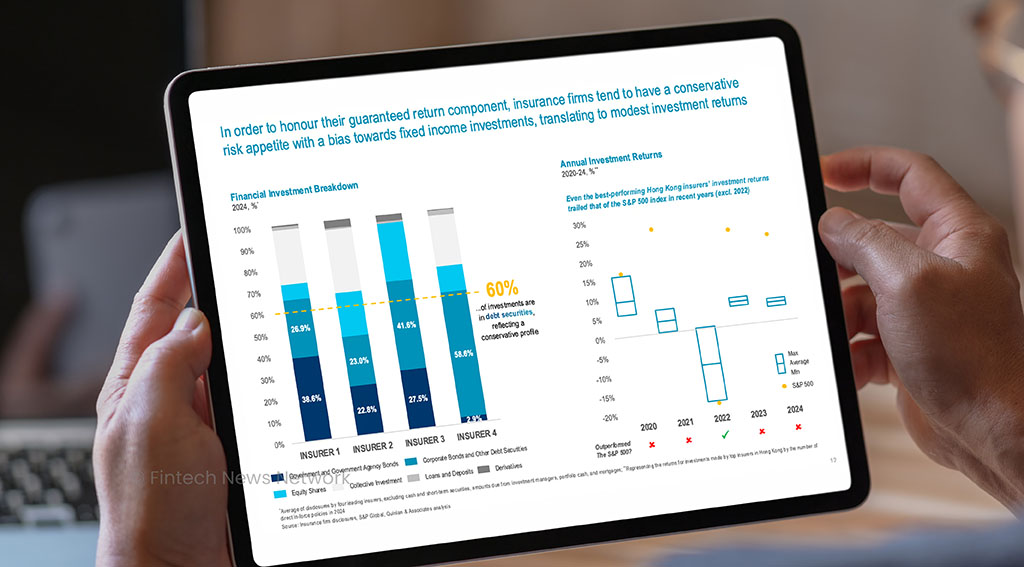
Beyond the high costs, the “investment” component of these policies often fails to deliver on its potential. Insurers are naturally conservative, allocating roughly 60% of their portfolios to debt securities to match their long-term liabilities.

While this keeps the insurer safe, it leaves the policyholder with mediocre returns that have consistently lagged behind major benchmarks like the S&P 500. Worse still, the non-guaranteed dividends that agents illustrate during the sales pitch frequently fail to materialise.
A study of 135 whole life policies from Hong Kong’s top insurers revealed an average long-term fulfilment ratio of just 79%, meaning most customers received significantly less than they were led to expect.
BTIR 2.0, the Digital Revolution of “Buy Term, Invest the Rest”
These structural inefficiencies have catalysed renewed interest in a strategy known as “Buy Term, Invest the Rest” (BTIR).
The logic is mathematically compelling: instead of bundling insurance and investment into one expensive package, a consumer buys a low-cost term life policy for pure protection and invests the savings directly.

The premium difference is astronomical. Whole life policies can be up to 22 times more expensive than term life equivalents for the same coverage.
By decoupling these needs, individuals gain control over their assets, significantly higher liquidity, and the freedom to pursue investment strategies that actually match their risk appetite.
While the BTIR in Hong Kong concept is not new, it is currently undergoing a revolution dubbed “BTIR 2.0,” fuelled by the growth of digital-first financial platforms in Hong Kong.
Virtual insurers like Bowtie and wealth-tech platforms like Syfe have slashed the costs of executing this strategy. These digital native providers are able to skip the costs related to establishing offline branch networks, employing front-office staff, or paying commissions to agents and wealth managers.

In doing so, virtual insurers, in particular, are offering term life premiums that are roughly 32% cheaper than traditional players, while digital wealth platforms have cut management fees by nearly half compared to traditional advisors.
Over long investment horizons, these cost savings compound meaningfully.
A comparative analysis suggests that a 30-year-old adopting a digital BTIR strategy could potentially accumulate a portfolio worth over HKD 27 million by age 85, compared to just HKD 4 million from a traditional whole life policy, a difference of nearly seven times the value.
Whole Life vs BTIR Comes Down to Priorities
Granted, there is no universal answer when choosing between a whole life insurance policy and a BTIR approach. The right decision ultimately depends on an individual’s personal circumstances, risk tolerance, and financial priorities.
Individuals with a lower risk appetite, strong preference for certainty, predictable cash flow, and clear legacy planning objectives may find whole life insurance more suitable. Its guaranteed payout provides peace of mind, while the forced savings component can serve as a disciplined way to accumulate wealth over time and support long-term legacy goals.
By contrast, individuals with a higher risk appetite, stronger investment confidence, greater time availability, and more flexible liquidity needs may be better positioned to pursue the higher return potential offered by a BTIR strategy. This approach offers greater cash flow flexibility and liquidity, particularly for those without immediate legacy planning concerns or with less predictable income streams.
As BTIR gains traction, insurance agencies will need to adapt by evolving the role of agents into that of trusted financial advisors. This shift requires agents to provide more holistic wealth management guidance that goes beyond insurance products.
Quinlan & Associates’ analysis indicates that with Hong Kong’s combined onshore and offshore wealth pool expected to grow meaningfully in the coming years, agencies have a clear opportunity to capitalise on these structural wealth tailwinds.

At the same time, rising demand for term life insurance opens the door for closer collaboration between life insurers and investment firms, including wealthtechs, robo advisors, and securities brokerages.
The report’s analysis suggests that partnerships can take many forms, from referral and affiliate arrangements to white-label investment platforms powered by investment firms and branded under insurer partners, creating mutually beneficial distribution and cross-selling opportunities.
These models allow insurers to remain relevant while participating in broader wealth journeys, rather than competing directly with digital D2C solutions.
Encouraging the adoption of more affordable term life products as part of a BTIR strategy may also help narrow Hong Kong’s existing mortality protection gap. This is particularly relevant for uninsured lower-income groups and underinsured middle-income segments.
Uninsured individuals gain access to affordable coverage, while underinsured households can significantly increase protection levels due to the lower premiums associated with term life insurance compared to whole life policies.
Even well-insured segments stand to benefit from the potentially higher investment returns available through disciplined long-term investing alongside term coverage. In that sense, BTIR is a potential lever for improving financial resilience across the market.
The opportunity lies in meeting consumers where they are: offering flexible protection, credible investment pathways, and integrated advice that strengthens financial resilience and long-term wealth outcomes across the market.
Featured image edited by Fintech News Hong Kong based on image by thanyakij-12 on Freepik
