



Close Menu
    • Digital Transformation
    • Open Banking
    • Funding
    • Remittance
    • Regtech
    • Hong Kong Fintech Report
    • HK Fintech Startup Listing
    • China
    • Taiwan
    • Submit Press Release
    Facebook LinkedIn X (Twitter) YouTube RSS
    • About
      • About Fintech News Network
      • Contact Us
      • Work With Us
    • FNN Media Kit
    • Fintech Newsletter
    • Submit Press Release
    • Submit
      • Submit Press Release
      • Submit Startup
      • Webinar Inquiry APAC
    • HK Fintech Startup Directory
    Fintech Hong Kong
    part of Fintech News Network

    Fintech News Network

    LinkedIn Facebook X (Twitter) Instagram YouTube TikTok RSS
    Free Newsletter
    • Payments
    • Blockchain
    • Wealthtech
    • Virtual Banking
    • InsurTech
    • Lending
    • Report
    • Fintech Events
    Fintech Hong Kong

    Fintech News Network

    Home»Security»Cybercrime Is Surging Across APAC Yet Defences Remain Fragmented
    Security Sponsored Post

    Cybercrime Is Surging Across APAC Yet Defences Remain Fragmented

    The region experienced a significant surge in human-led attacks, accounting for over 60% year-on-year growth, and a 37% overall increase in attack rates.
    Fintech News Hong KongFintech News Hong KongJuly 29, 20255 Mins Read
    LinkedIn Facebook Twitter Telegram Copy Link Email
    Cybercrime Is Surging Across APAC Yet Defences Remain Fragmented
    Share
    LinkedIn Facebook Twitter Telegram Copy Link Email
    Free Newsletter

    Get the hottest Fintech Hong Kong News once a month in your Inbox

    APAC saw a sharp rise in human-led attacks in 2024, with attack rates growing over 60% year-on-year and increasing 37% overall, according to the LexisNexis Risk Solutions Cybercrime Report 2025.

    After years of rising global fraud, the report reveals that fraud is now plateauing in most regions. APAC, however, tells a different story.

    In 2024, while global daily fraud attack rates rose by just 1%, APAC experienced a dramatic 61% surge in human-led attacks, driving a 37% overall increase in attack rates. This coincided with a 16% rise in digital transaction volumes, highlighting a growing gap between rapid digital growth and underdeveloped fraud defences in the region.

    The report also shows fraud is increasingly driven by people rather than bots. Brute-force automation campaigns are declining, replaced by calculated, credential-based attacks. Fraudsters are exploiting weaknesses in identity checks, authentication layers and outdated digital know your customer (KYC) systems.

    The Account Takeover Problem

    Account takeover (ATO) fraud remains a dominant threat. Third-party ATOs made up 74.5% of fraud cases in APAC, rising from 66.3% the previous year. First-party fraud is responsible for 6.3% of cases.

    This underlines a reality familiar to banks and fintechs: identity is still one of the easiest vulnerabilities to exploit. Even with improved onboarding and compliance processes, fraudsters continue to breach access. Once inside, the damage is often done. Staying ahead requires understanding where and how these attacks occur.

    The Mobile-Desktop Mismatch

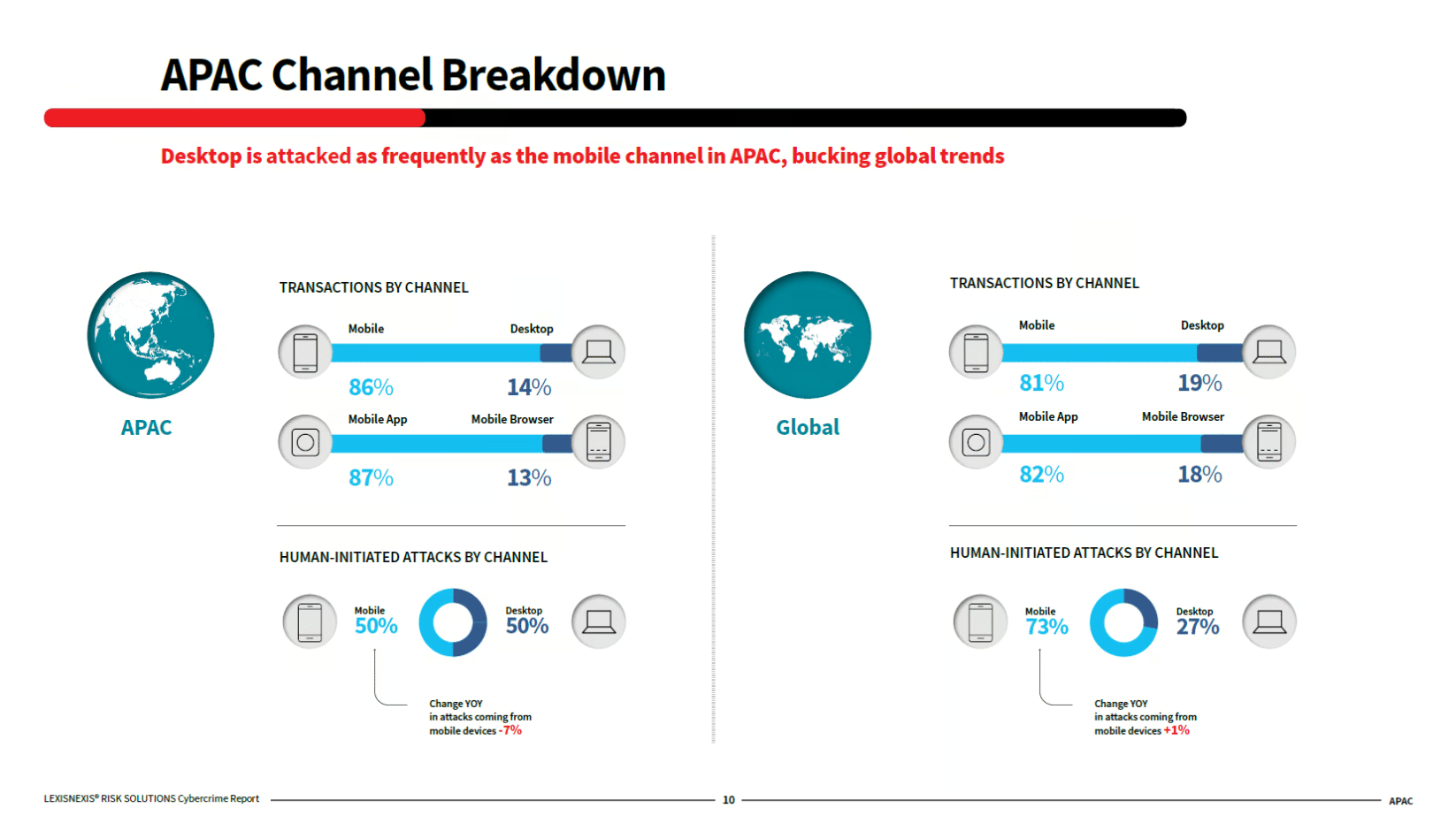
    The LexisNexis Risk Solutions Cybercrime Report notes that mobile leads digital activity in APAC, making up 86% of all transactions, while desktop accounts for just 14%.

    Despite its smaller share, desktop attracts just as much attention from attackers as mobile.
    LexisNexis-Risk-Solutions-Cybercrime-Report-2025-APAC-
    Screenshot taken from the LexisNexis Risk Solutions Cybercrime Report 2025.

    In 2024, fraud attempts were evenly split between mobile and desktop, with APAC’s desktop attack rate doubling the global average. This shows attackers haven’t abandoned older channels. Instead, they’re targeting areas with legacy infrastructure or weaker monitoring.

    The notion that fraud has fully ‘gone mobile’ oversimplifies the reality. While mobile adoption grows, desktop remains a soft target.

    Sectors Under Pressure

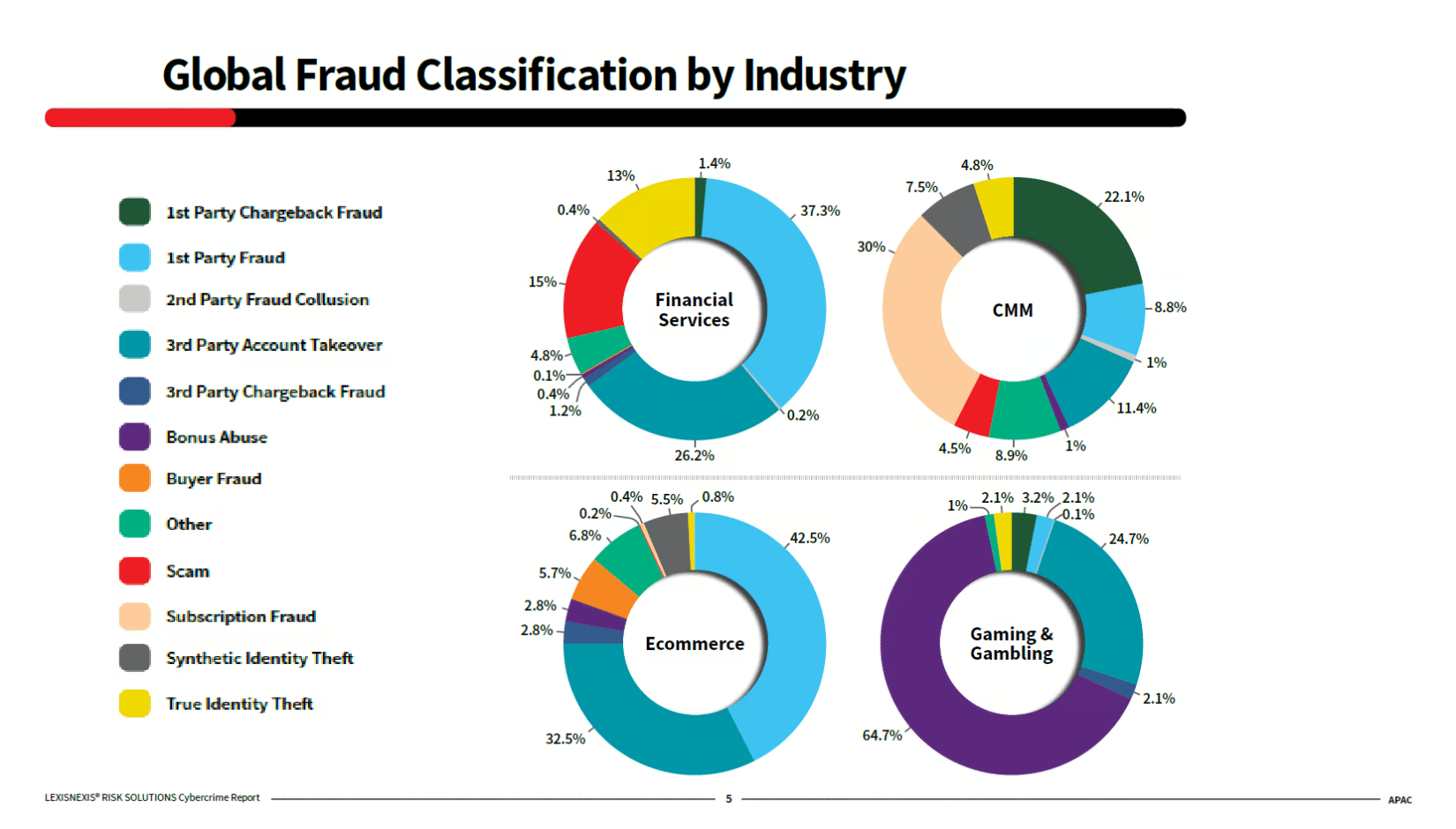
    These trends aren’t impacting all industries equally. Communications, mobile and media platforms faced an 87% surge in attacks, while financial services saw a 54% increase. Both sectors also reported higher levels of bot-driven activity.

    It’s unsurprising. These industries handle vast amounts of user activity, payments and personal data, making them prime targets for attackers. They often serve as gateways into larger fraud networks, enabling fraudsters to reuse, resell or scale stolen credentials across various attack methods.
    LexisNexis Risk Solutions Cybercrime Report 2025.
    Screenshot taken from the LexisNexis Risk Solutions Cybercrime Report 2025.

    Country-level Complexity

    A closer look at country-level trends reveals a fragmented picture.

    Singapore hit record highs in scam cases and losses, with a shift toward authorised push payment fraud. Japan saw a 77% rise in human-led attacks and a 40% increase in bot traffic. Hong Kong reported the highest fraud losses per capita, while Australia faced rising fraud despite declining bot activity.

    There’s some progress, though uneven.

    Malaysia mandated behavioural biometrics for banks, adding a new fraud detection layer. In 2024, Bank Negara Malaysia reported that there was a 52% decline in fraudulent unauthorised transactions that involved malware and phishing, the exact types of fraud that the security measures were designed to stop.

    Australia introduced a cross-industry scam prevention framework with fines up to AUD $50 million for non-compliance. There has been a year-over-year decline in scam losses since then, with losses falling 13.1% in 2023 and then by a further 25.9% in 2024.

    Singapore’s shared responsibility model assigns scam loss accountability but only for third-party fraud, while Thailand is still exploring a similar framework, though regulations remain unclear.

    This lack of regional alignment allows fraudsters to pivot between markets, exploiting gaps in policy, enforcement and tech readiness.

    AI in the Hands of Both Sides

    The Cybercrime Report highlights AI’s growing role in fraud. Fraudsters are leveraging generative AI for document spoofing and synthetic identity creation, particularly during account onboarding.

    On the brighter side, banks and fintechs are using AI-powered technology to spot anomalies in behavioural data, device intelligence and identity signals. While these tools are impactful, their effectiveness depends on robust data-sharing and well-trained models. Without them, even advanced tech has its limits.

    Fraudsters Are Coordinating, but Are We?

    The Cybercrime Report describes how interconnected fraud networks have become. Identities flagged in APAC often reappear targeting institutions in Europe and North America within days, giving attackers both scale and speed.

    Yet, many institutions still combat fraud in silos, hindered by data privacy barriers, inconsistent regulations or a lack of shared infrastructure.

    The firms that perform better are those integrated into shared intelligence ecosystems. As attacks grow smarter and APAC bears a disproportionate burden, some institutions are holding the line with layered defences, real-time monitoring and improved risk orchestration.

    The tools exist. What’s missing is a unified playbook.

    Download the APAC Cybercrime Report here.

    LexisNexis Risk Solutions Cybercrime Report 2025.


    Featured image: Edited by Fintech News Singapore, based on images by oleshkoart, bolshooylenny and andrew_derr via Freepik.

    Share. LinkedIn Facebook Twitter Telegram Copy Link Email

    Author

    Avatar photo
    Fintech News Hong Kong
    • Website
    • Facebook
    • X (Twitter)

    Related Posts

    Alvin Feng Sets Out Huawei’s Vision for AI-Driven Banking at MWC 2026

    March 25, 2026

    Turn Any iPhone Into a Payment Checkout Device With Adyen

    March 25, 2026

    Building Trust in Digital Asset Infrastructure with Hardware Roots of Trust

    March 24, 2026

    Statrys Introduces Flexible, Pay-Per-Use Accounting Plans for SMEs in Hong Kong

    March 2, 2026

    Naver Exposes 15,000 Knowledge iN Users’ Activity, Moves to Improve Privacy Controls

    February 16, 2026

    Sumsub Warns That Identity Fraud Is Becoming Sharper and Better Planned

    February 12, 2026

    Scaling AI in Finance Demands an Ecosystem Approach, Says Huawei’s Roger Wang

    January 30, 2026

    Hong Kong Strengthens Bank Controls After HK$6.4B in Fraud Losses

    January 28, 2026
    Fintech Hong Kong Newsletter
    Subscribe to the most important Fintech Hong Kong News
    PaymentsSponsored Post

    Turn Any iPhone Into a Payment Checkout Device With Adyen

    March 25, 2026
    Follow Us
    • LinkedIn
    • Facebook
    • X / Twitter
    • Instagram
    • YouTube
    • TikTok
    Security Sponsored Post

    Building Trust in Digital Asset Infrastructure with Hardware Roots of Trust

    Izzat Najmi AbdullahMarch 24, 2026
    Featured Fintech Webinar

    Fireblocks

    Featured Fintech Report

    Identity Fraud Report 2025-2026

    Featured Fintech Videos

    AI Pilots Fails

    dtcpay

    Featured Webinar Replay

    Webinar - Inside Asia Pacific’s Fraud Crisis and the Battle to Stop It

    Hong Kong Fintech Report

    Hong Kong Fintech Report 2025

    Malaysia Fintech Report

    MY Fintech Report 2025

    Singapore Fintech Report

    SG Fintech Map 2025

    Indonesia Fintech Report

    Indonesia Fintech Report 2025

    UAE Fintech Report

    UAE Fintech Map 2024

    Whitepapers & E-Books
    The Tipping Point for Innovation in B2B Payments
    The Tipping Point for Innovation in B2B Payments
    Visa Direct
    Identity Fraud Report 2025-2026
    Identity Fraud Report 2025-2026
    Sumsub
    Partner Content
    • Statrys Introduces Flexible, Pay-Per-Use Accounting Plans for SMEs in Hong Kong
      March 2, 2026
      Statrys Pay-Per-Use Accounting
    • Sumsub Warns That Identity Fraud Is Becoming Sharper and Better Planned
      February 12, 2026
      Identity Fraud 2025-2026
    • Scaling AI in Finance Demands an Ecosystem Approach, Says Huawei’s Roger Wang
      January 30, 2026
      huawei ronghai program
    Upcoming Fintech Events
    Why Stablecoins May Become The Backbone of 24/7 Global Trade
    April 15, 2026
    Featured Online
    Money20/20 Asia 2026
    April 21, 2026
    -
    April 23, 2026
    Thailand
    Featured
    China Information Technology Expo (CITE) 2026
    April 9, 2026
    -
    April 11, 2026
    China
    -
    Shenzhen
    NexTech Week Tokyo 2026
    April 15, 2026
    -
    April 17, 2026
    Japan
    -
    Tokyo
    Temenos Connect Taiwan 2026
    April 16, 2026
    Taiwan
    -
    Taipei
    Promote Event View More
    FINTECH RESOURCES

    Navigations
    • About Fintech News Network
    • Contact Us
    • Media Kit
    • Work With Us
    • Fintech Hong Kong Newsletter
    • Submit a Fintech Hong Kong Press Release
    • Fintech Events Hong Kong & China
    • Fintech HK Startup Report
    • Submit Your HK Fintech Startup
    • Privacy Policy / Disclaimer
    Other Fintech News Network Publications
    Fintech News Hong Kong
    Fintech News Singapore
    Fintech News Malaysia
    Fintech News Philippines
    Fintech News Network Indonesia
    Fintech News Network Australia
    Fintech News Switzerland
    Fintech News Baltic
    Fintech News Nordics
    Fintech News America
    Fintech News Middle East
    Fintech News Africa
    Get Informed

    Subscribe to Updates

    Subscribe to the most important Fintech Hong Kong News

    LinkedIn Facebook X (Twitter) YouTube RSS
    • About Fintech News Network
    • Contact Us
    • Media Kit
    • Work With Us
    • Fintech Hong Kong Newsletter
    • Submit a Fintech Hong Kong Press Release
    • Fintech Events Hong Kong & China
    • Fintech HK Startup Report
    • Submit Your HK Fintech Startup
    • Privacy Policy / Disclaimer
    © 2015 - 2026 Copyright Finanzpro GmbH. All Rights reserved.

    Type above and press Enter to search. Press Esc to cancel.